Program Overview
Total Clock Hours
80 hours
Program Type
Non-Degree
Distance Learning
No
Program Approved
06/01/2018
Program Description
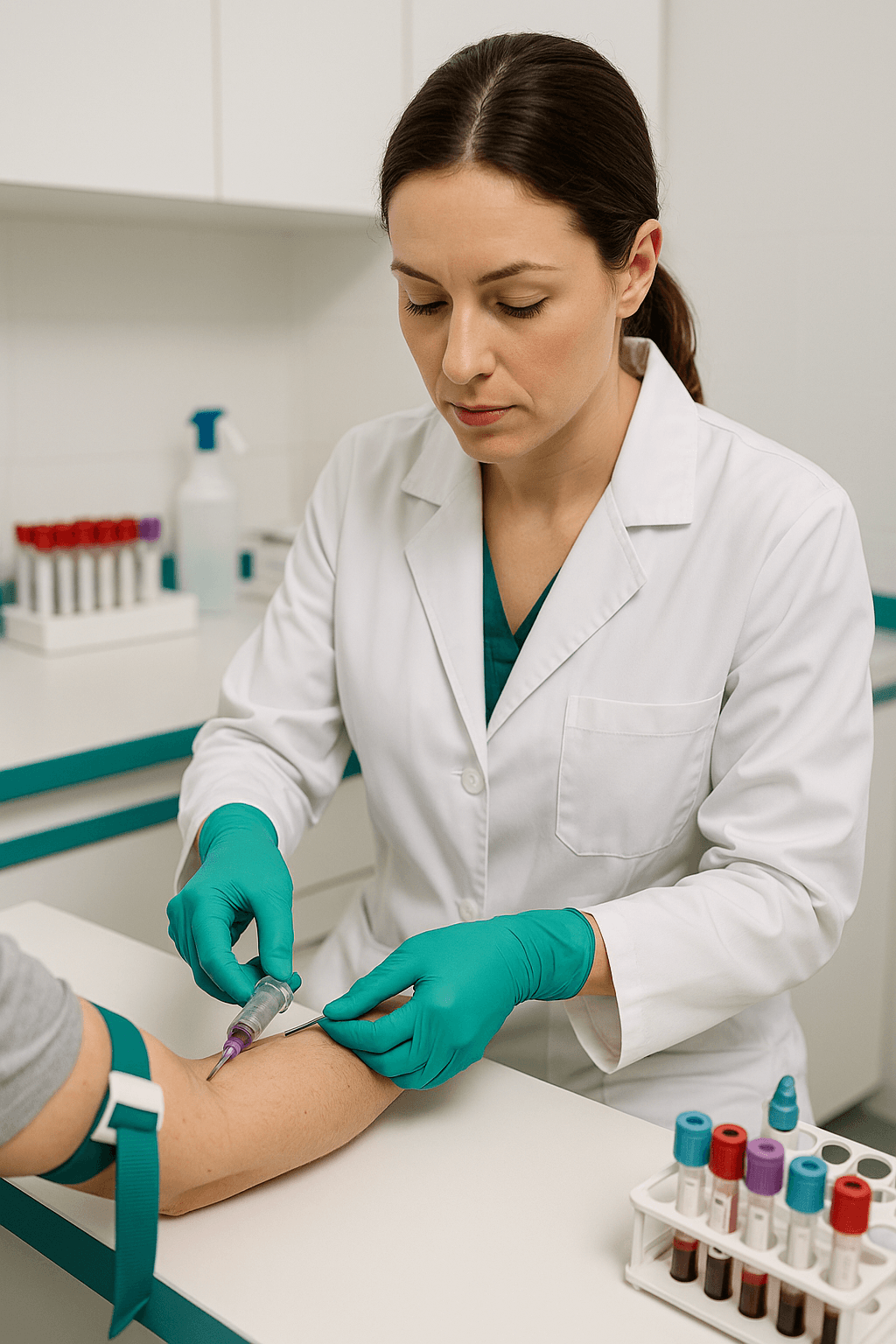
This comprehensive program prepares students for certification as Phlebotomists through extensive training in blood collection techniques, laboratory procedures, and patient care. Students gain hands-on experience in clinical settings.
The curriculum covers venipuncture and capillary puncture techniques, specimen handling, infection control, anatomy and physiology of the circulatory system, and professional conduct in healthcare environments.
Program Objective
Upon completion, students will be prepared to sit for national phlebotomy certification exams, demonstrate proficiency in venipuncture and capillary puncture techniques, maintain infection control standards, properly handle and process specimens, and provide compassionate patient care.
Program Mission
To prepare competent, certified Phlebotomists who can safely and effectively collect blood specimens while providing excellent patient care in hospitals, clinics, laboratories, and blood donation centers.
Outline of Subject Matter
| Topic | Description | Hours |
|---|---|---|
| Basic Phlebotomy | Basic infection control, universal precautions and safety; basic anatomy and physiology of body systems with emphasis on the circulatory system; proper identification of patient and specimens; proper selection and preparation of skin puncture site; blood collection equipment, types of tubes and additives, proper order of draw; post-puncture care; appropriate disposal of sharps, needles and waste. | 20 |
| Advanced Phlebotomy | Advanced infectious disease control and biohazards; anti-coagulation theory; knowledge of pre-analytical sources of error in specimen collection, transport, processing and storage; anatomical site selection and patient preparation; risk factors and appropriate responses to complications; recognition of and corrective actions for problems in test requisitions, specimen transport and processing; communication, interpersonal relations, stress management, professional behavior, ethics and legal implications; quality assurance in phlebotomy; legal issues related to blood collection. | 20 |
| Externship | Practical instruction in phlebotomy in a clinical setting. Perform a minimum of 10 skin and 50 venipunctures. | 40 |
Launch Your Phlebotomy Career
Master blood collection techniques and become a certified Phlebotomist with our hands-on training.